SONGWRITER
Misirlou: from Ottoman melody to surf-rock lightning
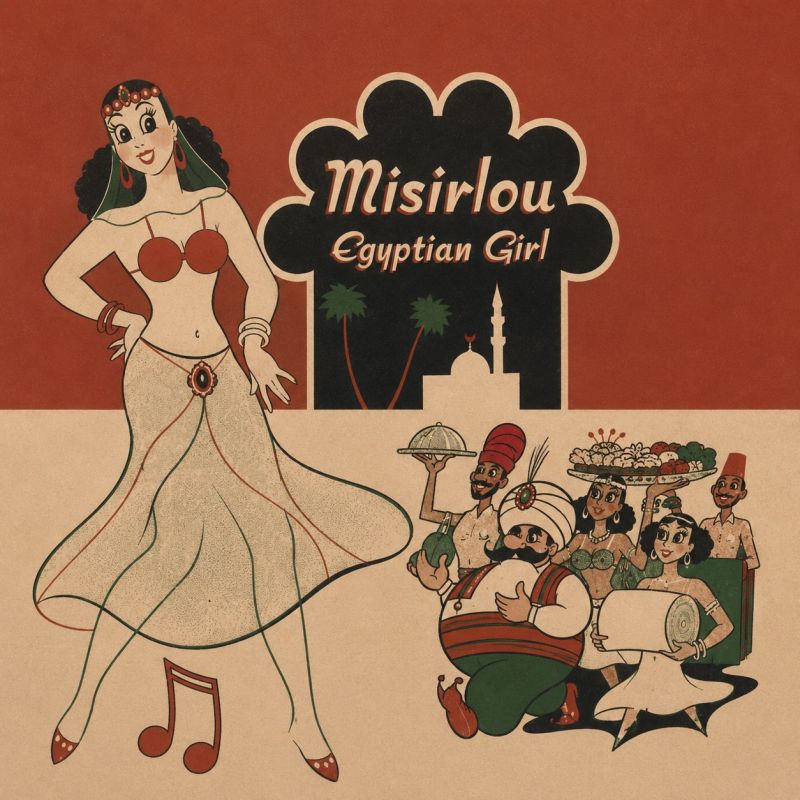
Misirlou album cover

By Serg Childed
Misirlou is one of those melodies that seems to belong to several worlds at once. Long before Dick Dale turned it into surf-rock lightning, the song circulated around the Eastern Mediterranean, where Greek, Turkish, Arabic, Armenian, Jewish, and other musical memories often crossed the same ports, cafes, and dance floors. The best-known early recording is the 1927 version by Tetos Demetriades, a Greek singer from Istanbul who later worked in the United States.
The title is usually understood as Egyptian woman, from a Turkish word rooted in the Arabic name for Egypt. That meaning matters less as a fixed plot than as a sign of the song's old border-crossing imagination. In the early vocal form, Misirlou sounds like a love song carried by distance, desire, and cultural mixture; in later instrumental forms, the same melody becomes almost pure motion.
That is why the song could survive such a dramatic change of body. Dick Dale's 1960s version stripped away the old vocal setting and pushed the melody through rapid picking, heavy attack, and electric reverb, turning a Mediterranean tune into one of surf rock's defining signals. Quentin Tarantino's use of Dale's recording in Pulp Fiction then fixed the track in global pop memory as a burst of speed, danger, and instant recognition.
Listen to Tetos Demetriades perform Misirlou:

Compositionally, the Tetos Demetriades version of Misirlou shows how a true Ottoman melody can develop over a typical flamenco harmony. This meeting of cultural lines is part of the song's special force: the melodic surface points toward the Eastern Mediterranean, while the accompanying harmony gives it a familiar Spanish dramatic frame. Its mode can be read as A harmonic minor, while the refrains bring forward a quintessential flamenco chain that works as a variation of the Phrygian cadence: Am–G–F–Dm7–E. The progression moves from the tonic Am toward the major dominant E, giving the phrase a clear downward pull and a firm point of arrival.
The verses are built around the alternation of the major dominant E and the submediant F7, creating tension that waits for release. When the refrain arrives, the long-awaited melodic motion gives that tension a shape the ear can follow. This is one reason Misirlou remains so readable even when the arrangement changes completely: Dale's surf-rock version did not invent the charge, but amplified a structure that was already built to travel.
For those intrigued by the harmonic minor scale, consider delving into further compositions and exploring their harmonic analysis through the articles listed below:
- 6 songs combining harmonic minor and Aeolian mode
- The Beatles songs in harmonic minor and Aeolian modes
- The Doors songs in Aeolian and harmonic minor modes
- Mariposa Traicionera: meaning and flamenco roots of Maná's top hit
- Livin' la Vida Loca: why is Ricky Martin's best song so catchy?