SONGWRITER
Porque Te Vas: meaning behind Jeanette's song of departure
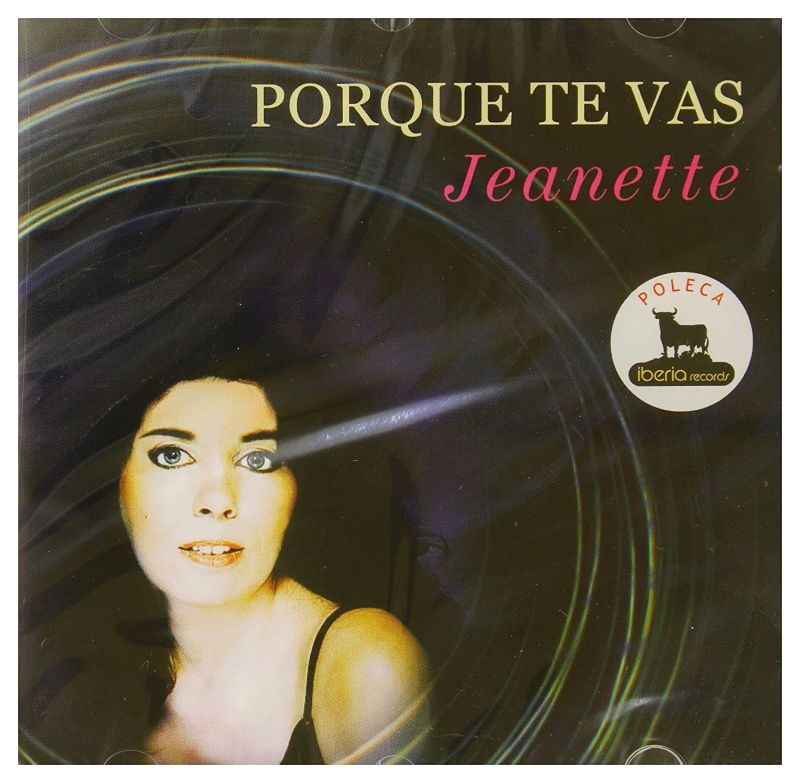
Jeanette's Porque Te Vas CD cover

By Serg Childed
Music Period: 1970s
Porque Te Vas is the best-known international song recorded by Jeanette Anne Dimech, professionally known as Jeanette. The track was released as a single in 1974 and composed by Spanish songwriter José Luis Perales, but its wider life began after it appeared in Carlos Saura's film Cría cuervos.
Initially, Porque Te Vas did not receive any significant attention and only hit the charts two years later when it was released on the soundtrack for Cría cuervos, a 1976 drama directed by Carlos Saura. It is noteworthy that the song was released during the fall of Francoism when Spanish society joined the pan-European cultural wave, and Jeanette herself was compared to a sunbeam shining down on a country under a strict military regime.
The lyrics of Porque Te Vas, literally meaning Because You Are Leaving, describe a simple scene of abandonment. The narrator reflects on the coming parting with her lover, while ordinary images—the sun at her window, a sleeping city, a childlike comparison—make the sadness feel private rather than theatrical.
Listen to Porque Te Vas performed by Jeanette:

Compositionally, Porque Te Vas is a fairly typical example of the rational use of classical tonal theory in a pop song, combining the Aeolian mode with harmonic minor scale. In the harmonic analysis of the song's chord chains, the scale degrees (denoted with Roman numerals) show the following progressions in the key of G minor:
- Gm–Cm–Gm–Cm–Gm–D7–Gm or i–iv–i–iv–i–V7–i for verses;
- E♭–Gm–B♭–D7–Gm or VI–i–III–V7–i for choruses.
The harmonic minor scale appears here in the V7–i authentic cadence that closes the musical phrases in the verses and choruses. Marked in red, the D7 major seventh chord does not belong to the Aeolian mode containing a minor dominant chord rooted in the fifth scale degree.
Notice the reasonable application of the E♭ and B♭ major triads in the choruses where they serve to create a tangible contrast, thereby bringing a positive mood to the overall minor narrative.
Discover more songs combining the Aeolian minor mode with harmonic minor scale and check out their harmonic analysis in the following articles:
- 6 songs combining harmonic minor and Aeolian mode
- 8 songs to introduce Aeolian mode and natural minor scale
- Golden Slumbers: lyrical origins of the famous Beatles lullaby
- La Gota Fría: vallenato music masterpiece refashioned by Carlos Vives
- Suavemente: meaning of Elvis Crespo's best song
- A Dios le Pido: Juanes' Spanish lyrics behind the song success
- Livin' la Vida Loca: why is Ricky Martin's best song so catchy?