


Vishnu Sahasranama: chant meaning and complete lyrics by Subbulakshmi

- Music Period:
- Indian Classical
- Country:
- India
- Genre:
- Devotional Song
Sahasranāma, literally meaning a thousand names in Sanskrit, is a common term for Dharmic religions of the Indian subcontinent, namely Hinduism, Jainism, Buddhism, and Sikhism. Sahasranāma texts exist for all major deities and typically include names, epithets, and various attributes associated with the deity's role and function in their respective Dharmic religion.
All sahasranamas belong to the literary genre stotra—meaning a hymn of praise—in which religious texts are presented in the form of poems in order to be easily sung in the melodic traditions of Indian classical music.
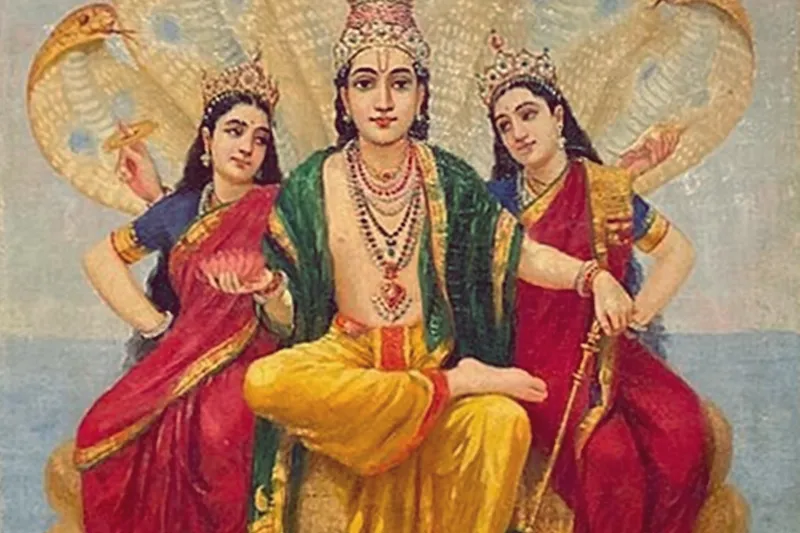
Known since at least the first millennium BC, Vishnu Sahasranāma is a stotra referring to one of the principal deities of Hinduism who, in alliance with Brahma and Shiva, forms the triple deity personifying the cosmic functions of creation, maintenance, and destruction. In this triad of deities known as the Trimurti, Brahma is postulated as the creator, Vishnu as the observer, and Shiva as the destroyer.
Perhaps the most appreciated recording of Vishnu Sahasranamam, with lyrics containing 1,000 names of Vishnu, is the version sung by M. S. Subbulakshmi—an iconic female vocalist of the Carnatic tradition who became the first-ever musician to be awarded the Bharat Ratna, India's highest civilian honor.
Listen to Vishnu Sahasranamam performed by M. S. Subbulakshmi:
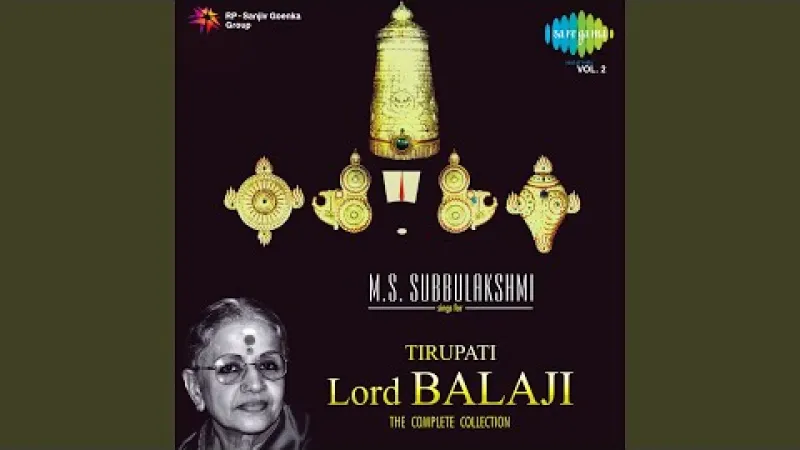
This Malayalam version of Vishnu Sahasranāma, performed by M. S. Subbulakshmi, showcases one of the most complete and accurate lyrics of the sacred hymn. The chant, performed without a rhythm section, is set against the background of the solo accompaniment of tanpura that provides a drone sound known in Western theory as the tonic organ point.
Curiously, the recording reveals a double-tracking vocal technique and actually contains two different parts sung by M. S. Subbulakshmi that were merged together during mixing.
You may also like
Meditation Sri Lalitha Sahasranama: 1000-name lyrics praising the beauty of Goddess Shakti
Meditation Om Namah Shivaya: chant meaning and lyrics diversity in songs set in Panchakshari Mantra
Meditation Vinayagar Agaval: medieval lyrics linking Ganesha with yoga practice
Meditation Hare Krishna Mantra: meaning and purpose of best-known Hindu chant
Meditation Mrityunjaya Mantra: meaning and lyrics of the oldest Shiva chant
Swarmandal Kishori Amonkar reclaimed her lost voice with Ayurveda