MALE VOCAL
Persiana Americana: meaning behind Soda Stereo's hidden gaze
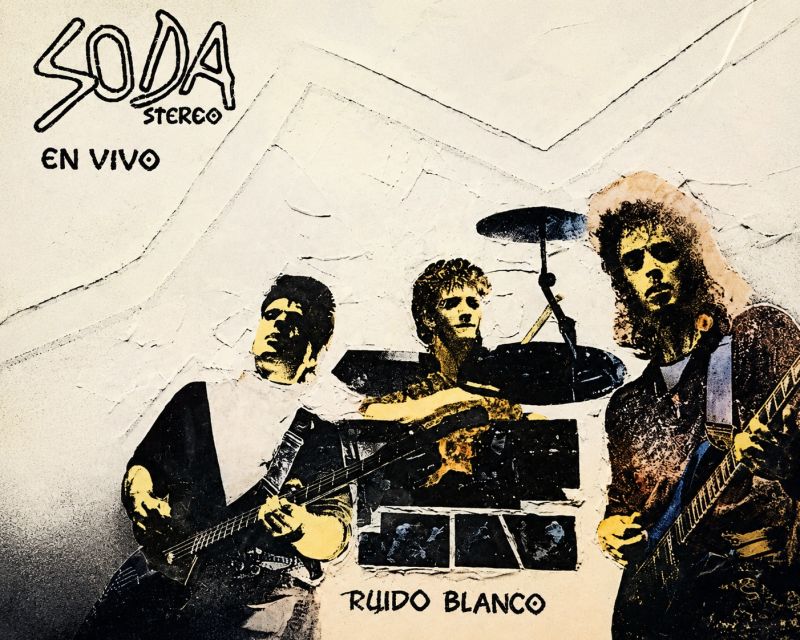
Soda Stereo CD cover

By Serg Childed
Persiana Americana became one of the essential songs in the repertoire of the Argentine band Soda Stereo after appearing on their 1986 album Signos. Written by Gustavo Cerati with Jorge Antonio Daffunchio, the track joined the band's new wave and post-punk sound with a sharper, more cinematic lyrical idea. Its guitar riff, dry rhythmic drive, and Cerati's controlled vocal delivery helped make the song one of the clearest bridges between early Soda Stereo style and the wider Latin American reach the band would soon command.
The title translates as American Blinds, referring to the slatted window covering through which the song's gaze is filtered. The lyrics do not unfold as a direct love confession, but as a scene of distance, watching, desire, and obstruction. The narrator is close enough to look, but separated by the blind itself, turning the song into a small theatre of voyeurism rather than a conventional romantic address.
That tension explains why Persiana Americana still feels so immediate. The song carries the nervous pleasure of seeing and not quite reaching, of desire sharpened by a barrier. Daffunchio's cinematic contribution gives the lyrics a visual charge, while Soda Stereo's arrangement keeps everything tight and physical. It is not only a song about wanting; it is a song about the frame that makes wanting more intense.
Listen to Soda Stereo perform Persiana Americana:
Compositionally, Persiana Americana is a typically major song with one small exception. Most of its chord progressions follow G Ionian, one of the most convenient keys for guitarists. Alongside the three primary major chords of the mode, G, D, and C, the song uses the Em minor chord of the sixth scale degree to balance the emotion without pulling the track out of its bright tonal frame.
The only clear deviation from tonal theory is the F major chord, which appears on the words "persiana americana." Harmonically, this moment is surprising, but it seems to serve the phrase itself: the sudden foreign colour adds uncertainty and disorder exactly where the lyrics focus on the blind, the barrier, and the unstable act of looking.
Discover more songs composed in Ionian major mode and check out their harmonic analysis in the following articles:
- 6 songs to unpack Ionian mode and the major scale
- 9 Beatles songs that combine harmonic major with Ionian mode
- Burbujas de Amor: playful and saucy lyrics by Juan Luis Guerra
- Mariposa Traicionera: meaning and flamenco roots of Maná's top hit
- Yo No Te Pido la Luna: origins and meaning of Daniela Romo's best hit
- Ramaya: the tonal workings of the famous African disco hit
- Beatles songs composed with just three primary chords