SONGWRITER
Hijo de la Luna: meaning of Mecano's tragic legend

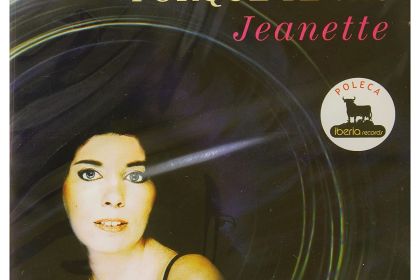
Hijo de la Luna CD cover

By Serg Childed
Written by José María Cano, Hijo de la Luna appeared on Mecano's 1986 album Entre el cielo y el suelo and became one of the Spanish group's most recognizable songs. The recording keeps the surface of a polished pop ballad, but its subject is closer to a fatal old tale than to a direct love song.
The title translates as Son of the Moon, and the lyrics unfold like a tragic legend. A Roma woman asks the Moon for a husband, but the wish comes with a price: her first child must belong to the Moon. When the child is born pale and grey-eyed, the father believes he has been betrayed, kills the mother, and abandons the child. The Moon then becomes the final keeper of the child, turning the song's title from a poetic image into the centre of the whole story.
Mecano also recorded Hijo de la Luna in other languages, which helped the song move beyond its original Spanish audience. Later versions by performers such as Loona, Sarah Brightman, Montserrat Caballé, and others placed the same melody in dance-pop, classical crossover, and concert settings. Across those versions, the song keeps its central shape: a compact myth of love, bargain, jealousy, death, and lunar transformation.
Watch Mecano perform Hijo de la Luna:

From a compositional standpoint, Hijo de la Luna shows unusually developed harmony for a pop ballad. The song is centred in C# minor, drawing mainly on C# Aeolian while also turning toward the harmonic minor scale. Its progressions use a wide range of Aeolian chords, constantly varied in extended chains, with refined alterations that give the song a more classical sense of direction.
The harmonic-minor colour appears in the verses, where the major dominant chord G# enters the minor-key frame. In the chorus, the harmony also uses the minor dominant G#m, but prepares it through the secondary dominant seventh chord D#7. In Roman-numeral terms, this can be read as V7/v, a temporary pull toward the dominant area rather than a simple diatonic move.
Taken together, this wide chord vocabulary, the constant variation of progressions, and the use of a secondary dominant to the minor dominant place the song in a higher compositional league than most mainstream pop ballads. This is why Hijo de la Luna can keep popular-song directness while carrying a more theatrical, almost classical gravity.
For those intrigued by minor-key harmony, Aeolian colour, and harmonic-minor dominant pull, consider exploring the following articles:
- 6 songs combining harmonic minor and Aeolian mode
- 8 songs to introduce Aeolian mode and natural minor scale
- Mariposa Traicionera: meaning and flamenco roots of Maná's top hit
- Livin' la Vida Loca: why is Ricky Martin's best song so catchy?
- Suavemente: meaning behind Elvis Crespo's merengue hit