

The art of Carnatic violin by Lalgudi Jayaraman

- Music Period:
- Indian Classical
- Country:
- India
- Genre:
- Raga
- Piece of Music:
- Raga Sankarabharanam
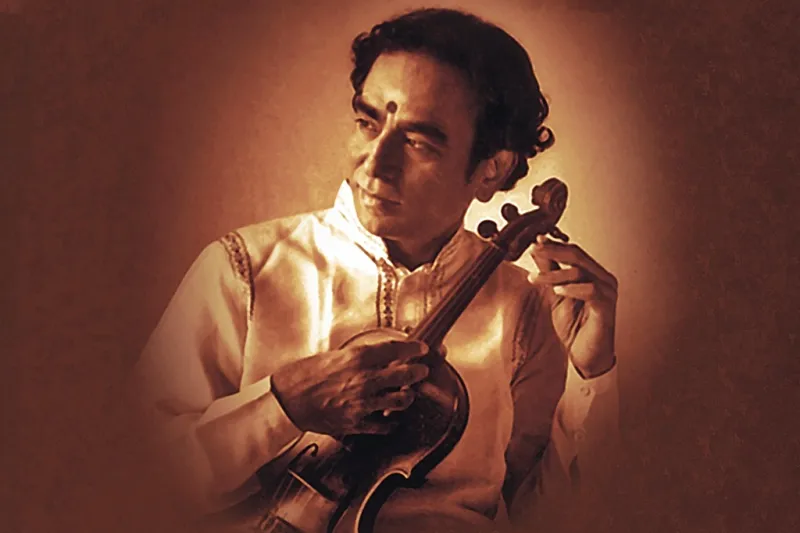
Lalgudi Jayaraman was an Indian violinist whose impeccable performing technique, coupled with his deep understanding of the canons of Carnatic classical music, allowed him to popularize the rich musical heritage of South India outside his homeland. He also left a significant mark on musical culture as a vocalist, lyricist, composer, and teacher of two dozen outstanding musicians in various genres.
The musical roots of Lalgudi Jayaraman's family go back to the 18th century when his great-great-grandfather performed with eminent master Tyagaraja who once visited their home. In keeping with the traditions of musical dynasties, Lalgudi Jayaraman began his studies at a very early age following the instructions of his father who developed a special intensive program for the boy to advance his many talents.
Jayaraman's entire career was filled with intense tours in India and in the West where his music was first presented at the Edinburgh Festival in 1965. On the eve of the festival, he was invited to visit the violin virtuoso Yehudi Menuhin where Jayaraman performed several ragas playing on Menuhin's Italian violin in place of his own instrument which Jayaraman had forgotten at the hotel. Fascinated by his technique, Menuhin asked him to play over and over, so Jayaraman performed seven ragas namely Sankarabharanam, Hemavathy, Karaharapriya, Keeravani, Mohanam, Mukhari, and Suba Pantuvarali. It was Menuhin who introduced Jayaraman's performance at the festival and subsequently gifted him with this Italian violin.
Listen to Sankarabharanam Ragam performed by Lalgudi Jayaraman:
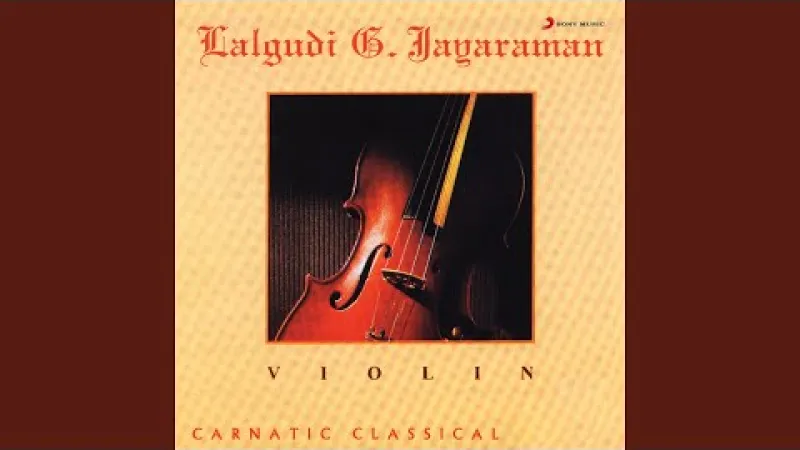
Jayaraman is recognized as one of the finest violinists of Carnatic tradition to develop his own performing style known as Lalgudi Bani. As a composer, he was most successful in writing music in the varnam genre—short pieces that encapsulate the main features of a raga.
You may also like
Sarangi The Hindustani maestro who arranged the Sārangī fiddle for a classical solo
Sitar Bhatkhande: the man who canonized music theory that introduced Indian classics to the West
Violin The fifth string of the Maihar school lead violin
Nadaswaram Krithi lyrics in Tyagaraja's songs defined South Indian classic tradition of the 18th century
Meditation Progressive rhythms and sacred themes of Shyama Shastri songs
Saxophone Kadri Gopalnath: nadaswaram musician who canonized the Сarnatic saxophone