


Dionisio Aguado's guitar method and tripodison guitar stand have been in use for 200 years

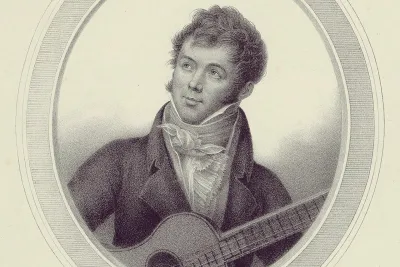
Dionisio Aguado y García was a Spanish composer who laid the foundations of modern performing techniques on classical guitar during the transition from the Сlassical era to the era of Romanticism. Published in 1843, his Nuevo Método para Guitarra remains to be an up-to-date teaching tutorial that the honored guitarist Andrés Segovia recommended to his students.
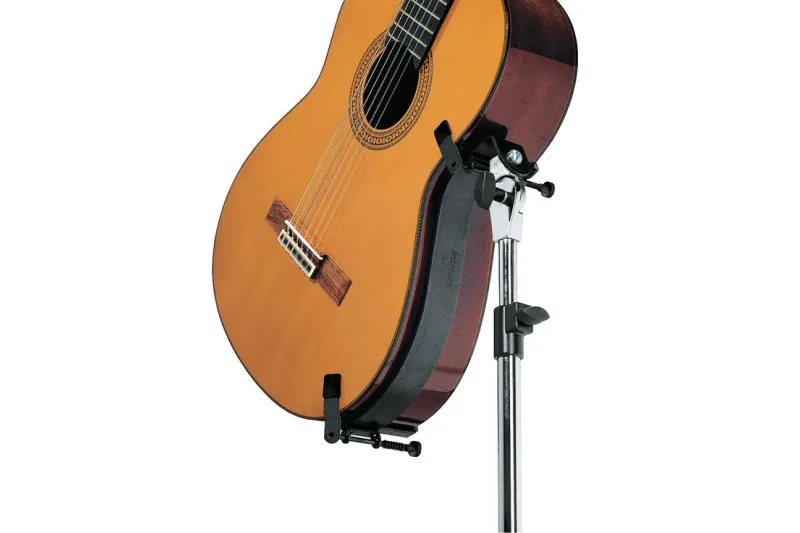
In addition to teaching etudes and exercises, Dionisio Aguado composed complex concert works and was the first to use a guitar holder called tripodison designed to improve the sound of a classical guitar by minimizing the dampening effect of the player's body touching the instrument.
Dionisio Aguado spent most of his life in Madrid and its environs with the exception of his Paris years that spanned a nine-year period from 1826 to 1837. In Paris, he focused primarily on teaching and giving concerts together with another prominent guitarist Fernando Sor. Although their performing technique differed in how they used their right hand, both composers admired each other's guitar skills. Reportedly, Sor played with his fingertips to provide a perfect guitar tone while Aguado preferred to use his fingernails in order to increase the speed of his performance.
Listen to Dionisio Aguado's Polonaise performed by Julian Bream:

In his Nuevo Método para Guitarra and in its earlier versions, Dionisio Aguado presented the most complete and detailed tutorial of the nineteenth-century guitar and laid out the playing technique which we still use today. The text gives substantial advice on technical aspects such as hand positions, angles of the fingers, and ornamentation as well as contains a sufficient number of etudes and various exercises aimed at helping the student achieve a very particular tone quality.
It should be noted that Dionisio Aguado devoted his whole life to developing guitar manuals and writing music exclusively for this instrument. In his desire to extract the purest possible natural sound, Aguado designed a special stand to minimize the points of contact between the instrument and the guitarist's body. Although not often, Aguado's invention—which he named tripodison—is used by modern classical guitarists to perform particularly complex works or simply for the convenience while playing acoustic or electric guitars.
4 comments so far
You may also like
Classical Guitar Fernando Sor: the Beethoven of the guitar
Classical Guitar Enrique Granados' dramatic voyage was cut short by a German U-boat
Classical Guitar The major chapter of guitar history introduced by María Luisa Anido
Classical Guitar Serenata Española by Joaquim Malats: the piano piece that conquered guitar world
Classical Guitar Capricho Arabe: the first composition of Francisco Tarrega became his epitaph
Classical Guitar Ferdinando Carulli: the Parisian sensation and décacorde guitar inventor

David Schramm
I just got one of those performance stands a few days ago. Works great for classical guitar.
Joan claret
Fantastic site of music and student guitar
Jacek Kado
Where did you get it from David?
Robin Tougas
I actually seen Pat Matheny use this, or something very similar to it in the late 1970's.