FILM
Cucurrucucú Paloma: the Mexican dove song of love and grief
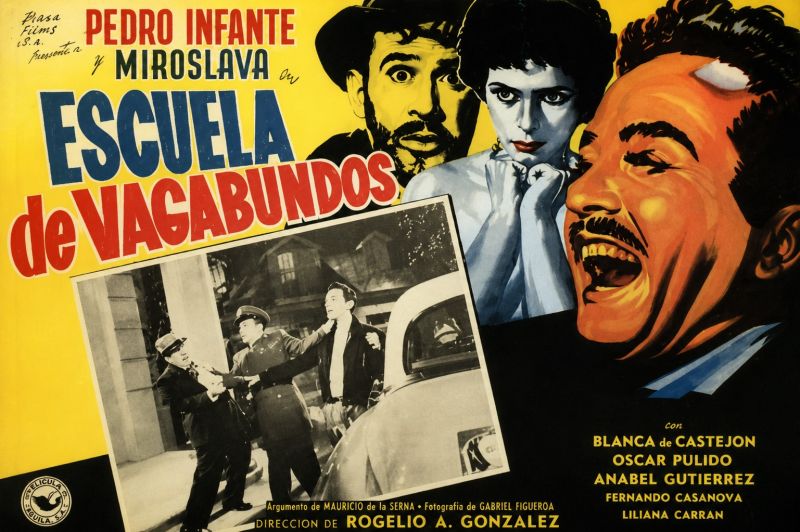
Escuela de vagabundos film poster

By Serg Childed
Musical Mode: Ionian Mode
Composed by Mexican songwriter Tomás Méndez in 1954, Cucurrucucú Paloma entered popular memory as a huapango-style song centered on grief, bird imagery, and a refrain that imitates a dove's call. The song first reached cinema audiences through Pedro Infante, who performed it in the 1955 Mexican film Escuela de vagabundos.
The title is usually understood as the sound of a dove: Coo-coo dove, or more literally the onomatopoeic cry of a mourning bird. In the lyrics, that cry becomes a sign of love sickness. The song tells of a man so consumed by sorrow that even the dove seems to carry his lament, turning a simple bird call into the emotional centre of the whole piece.
Later performances moved Cucurrucucú Paloma far beyond its Mexican film origin. Caetano Veloso's spare version in Pedro Almodóvar's Talk to Her made the song newly visible to international film audiences, and his recording later reappeared in the soundtrack world, including in Moonlight. Across those settings, the song keeps its old structure: a direct melody, a repeated cry, and a grief that can move between folk song, cinema, and art-song performance.
Watch Pedro Infante perform Cucurrucucú Paloma in Escuela de Vagabundos:

From a compositional standpoint, Cucurrucucú Paloma follows a clear major-key design. In the Pedro Infante chord reading, the song is centred in A Ionian and is accompanied by the three primary chords of the mode: the tonic A, the subdominant D, and the dominant seventh E7.
The major harmony keeps the form stable and transparent while the voice carries the grief. That contrast between a simple tonal frame and an expressive lament helps the song remain readable across many later arrangements.
Discover more songs composed in Ionian major mode and check out their harmonic analysis in the following articles:
- 6 songs to unpack Ionian mode and the major scale
- 9 Beatles songs that combine harmonic major with Ionian mode
- Burbujas de Amor: playful and saucy lyrics by Juan Luis Guerra
- Yo No Te Pido la Luna: origins and meaning of Daniela Romo's best hit
- Ramaya: the tonal workings of the famous African disco hit
- Beatles songs composed with just three primary chords