TECHNOLOGIES
Jesus' Blood Never Failed Me Yet: the homeless voice in Gavin Bryars' loop

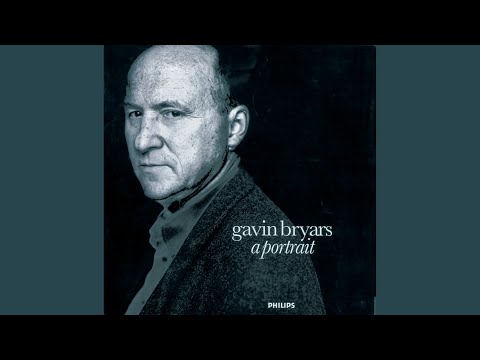
Jesus' Blood Never Failed Me Yet album cover

By Serg Childed
Jesus' Blood Never Failed Me Yet began in 1971 with a fragment of documentary sound collected by English composer Gavin Bryars. He was helping with recordings for a film about street life around Elephant and Castle and Waterloo in London when an unknown homeless man was captured singing a short religious refrain. The fragment was not used in the film, but Bryars later played it at home and noticed that the man's singing was in tune with his piano.
That discovery became stronger when Bryars made the phrase into a loop. During an early playback in a control room, he stepped away and left the door open while the tape kept repeating. When he returned, people nearby had been visibly changed by hearing the voice continue on its own, which confirmed that the small refrain could hold attention for far longer than its length suggested.
Instead of treating the recorded voice as background colour, Bryars lets it remain at the centre while strings, brass, and other instrumental layers slowly gather around it. The man is not corrected, harmonized into neatness, or replaced by a trained singer; the composition listens to him and builds a frame around the loop.
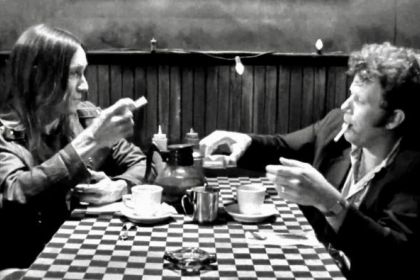
The first LP version appeared in 1975 on Brian Eno's Obscure label, which became a crucial home for experimental and minimalist music. That recording lasted about 25 minutes; later versions expanded the idea to 60 minutes, and the 1993 recording, with Philip Glass among the producers, ran for about 74 minutes with Tom Waits entering near the end. Waits's famous rough voice could have overwhelmed the source, but it works because the piece has already taught the listener where the centre is.
Listen to Gavin Bryars' Jesus' Blood Never Failed Me Yet:
The power of the piece comes from that plain contrast. A homeless singer, caught on rough tape, keeps repeating his private hymn while polished studio instruments gather around him like a refined city that never quite touches him. The loop makes the listener stay beside that voice, outside the usual rush of musical and everyday time.